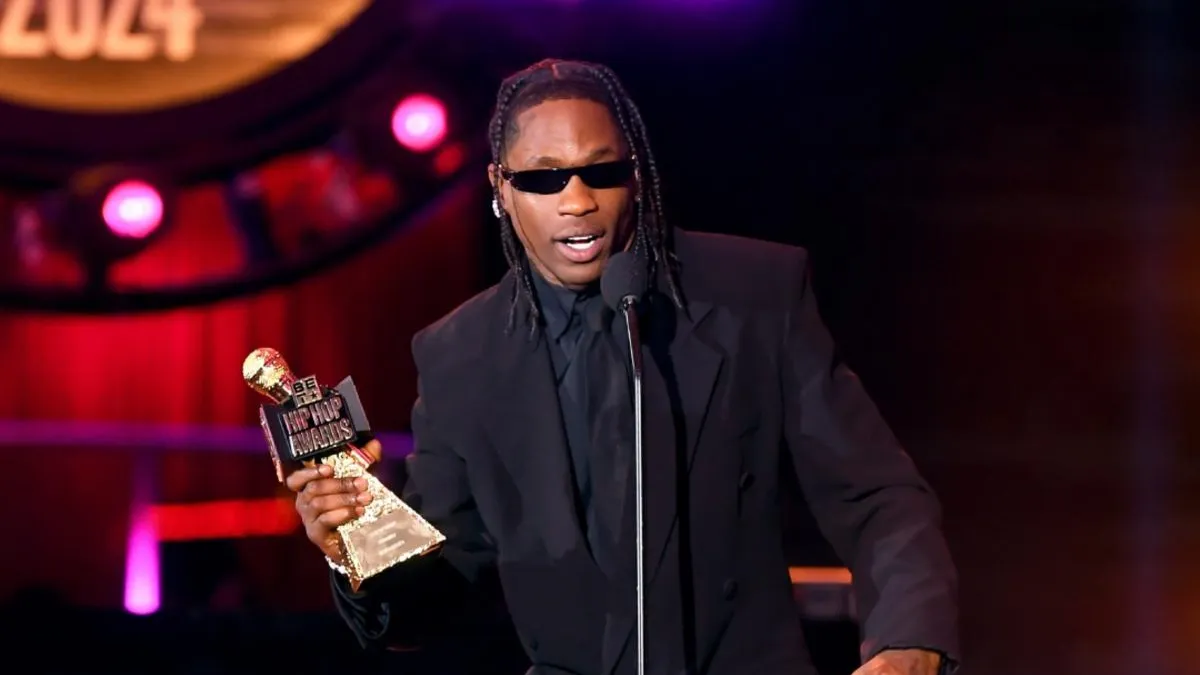


A copyright case filed against Travis Scott by two songwriters over an iconic sample has been dismissed without prejudice after nearly three years.
A copyright infringement case against Travis Scott, filed by two songwriters over the “alright, alright, alright” sample used in multiple tracks, has been dismissed without prejudice—meaning the claims can be refiled—after nearly three years of litigation.
The lawsuit, filed by songwriters Dion Norman and Derrick Ordogne back in January 2024, claims that Scott used an uncleared, pitch-altered sample of the 1991 track, “Bitches (Reply),” recorded by DJ Jimi, featuring the iconic “alright, alright alright” used in Scott’s hit songs “Stargazing” and “Til Further Notice.”
Scott and Sony (which is also named in the suit) previously pushed to dismiss the case, arguing that the sample was a “commonplace” element of music and did not qualify for copyright protection. However, Scott and his team allegedly reached out to the plaintiffs’ team previously to clear the sample—implying their recognition that it was eligible for copyright protection.
Now, the case has been dismissed without prejudice, enabling the plaintiffs to refile the claims at a later date. The dismissal arrived before the defendants officially received a ruling or a motion for summary judgment. Presumably, the two parties reached an amicable solution privately.
Norman and Ordogne alleged that Scott had incorporated the sample without permission into his hits “Stargazing” from the 2018 album Astroworld and “Til Further Notice” from his 2023 album Utopia. Both tracks entered the Top 40 of the Billboard Hot 100 upon release.
The songwriters’ filing cited other artists who had previously credited them for use of the same sample, including Kid Cudi for his 2013 song “Girls,” Cardi B for 2018’s “Bickenhead,” and Diddy’s 2023 track “Need Somebody.” The plaintiffs argued that such acknowledgements demonstrated that the sample was recognizable and had been treated as material eligible for protection.
Individual words and short, “familiar” phrases typically cannot be copyrighted under U.S. copyright law. However, original musical compositions and sound recordings may receive separate protection. Therefore, the distinction between an ordinary expression and a protected recorded sample is imperative in such disputes. With the case’s dismissal, the legal question surrounding the sample remains unanswered.