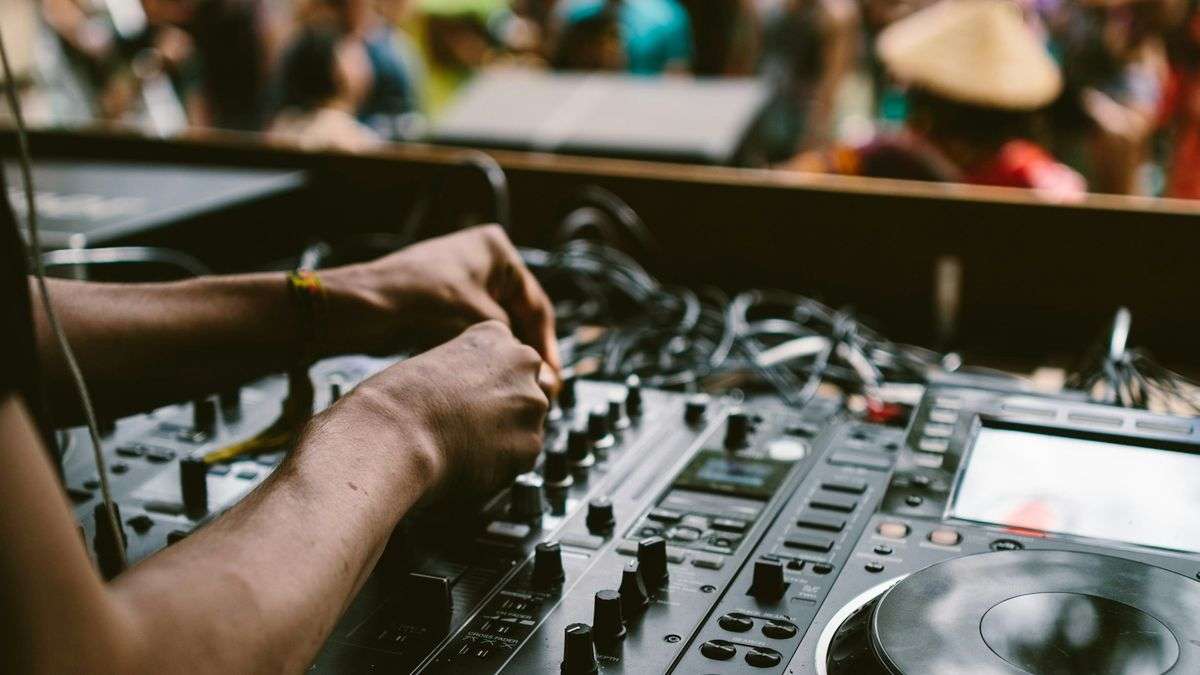


A great live show is an exchange between the DJ or artist on stage and the audience in the room. The artist gives, the audience responds, and each fuels the other to create a unique experience. Between songs, someone leans toward a friend and says they wish the band would play their favorite track. Perhaps someone else wants to throw a few dollars toward the stage, but they haven’t carried cash in years. The energy is there, but what is often missing is an easy way to act on it.
This article was created in collaboration with DMN partner Skyjam.
That gap is where Skyjam comes in. The platform is built around a simple idea: empower musicians and DJs to connect with fans through live song requests and tips. Anyone who has played a live set knows how much is happening at once. There is a setlist to manage, the room to read, and an audio mix to keep balanced. On top of all that, there are fans who want to talk, request a song, or show support, all while the artist tries to stay present and keep the show moving.
Requests can pull focus when they arrive as shouts from the floor or scribbled on napkins. In an increasingly cashless world, tipping has become harder, so a fan who wants to support an artist may not have an easy way to do so. Meanwhile, venue processes can make fan support slower or more complicated than it needs to be. Beyond the room, there is a larger challenge of building an audience on platforms whose algorithms artists cannot see, control, or reliably satisfy.
None of these issues are a creative failing on the artists’ part. Making a living in live music means facing these practical realities. Artists should not have to depend entirely on venue bureaucracy or on opaque algorithms to reach and monetize their audiences.
Skyjam gives artists more control over how they receive requests and support, starting with the live show itself. The platform lets musicians connect with fans through live song requests and tips, so the energy in the room has somewhere to go.
Picture the moment from the fan’s side. Someone in the crowd is hearing a song they love and wants to hear another. With Skyjam, the fan can send the artist a request, backed with a tip. The artist has a central place to see what the room wants and decides what to do with those requests. Maybe the request fits the next slot in the set. Maybe it sparks a detour nobody planned, but it turns the night into one of the best the fan has attended. Skyjam supports the live experience rather than competing with it, while the artist remains in control of their performance.
Tips through Skyjam do more than just offer a fan’s thanks. Fans can use it to support a specific song, a new release, or the live performance itself, which makes the exchange feel personal and tied to the ongoing performance. For the artist, it creates a faster, more direct path to earning from the show, without waiting on a venue’s process or a platform’s algorithm.
With Skyjam, the artist stays at the center. Every artist connects with a room differently, and Skyjam is meant to give artists more options rather than one rigid way to earn. Some may build the whole night around audience requests, while others may use them sparingly. Either way, the choice belongs to the artist.
It would be easy to treat song requests as a checkbox. In practice, the request is a small moment of recognition between the fan and artist. A fan is telling the artist what a song means to them, and the artist can choose to answer. Requests can open a spontaneous detour in the set or bring back a song that hasn’t been played in months. It might become the moment that the fan and their friends remember from the night. Skyjam helps the artist stay in control of the performance by deciding what to play and when, while it gives the audience a real way to take part in the direction of the live show.
Many fans want to support the artists they came to see, but fewer of them are carrying cash than ever. In an increasingly cashless audience, even generous people can find themselves with no easy way to say thanks to their favorite artists. Skyjam aims to remove that friction. Fans can support an artist in the moment, and that support can be tied to a specific song, a new release, or the live performance itself.
The result is a more personal, more direct exchange around the music and a clearer path between the work an artist puts in and the people who value it. Some nights the crowd is big and generous, while others it may be small and quiet. Skyjam does not promise a result from their one. It simply makes sure that when a fan wants to back a song, release, or the show itself, there are no barriers standing in the way.
“There is something powerful about supporting an artist in the exact moment their music moves you. Skyjam makes space for that exchange to happen—simply, directly, and while the music is still alive in the room,” says Joy Rubio, CMO of Skyjam.
Technology earns its place in live music when it helps create more human moments and gives artists more ownership, not when it adds another layer to manage. Skyjam’s goal is to make the live experience feel more connected, not more complicated, so that a show can still feel personal, spontaneous, and human.
Artists shouldn’t have to choose between a strong performance, meaningful fan interaction, and a practical way to earn from the value they create. More control over the show and more direct support from the people who are in attendance is what Skyjam was built to deliver.